
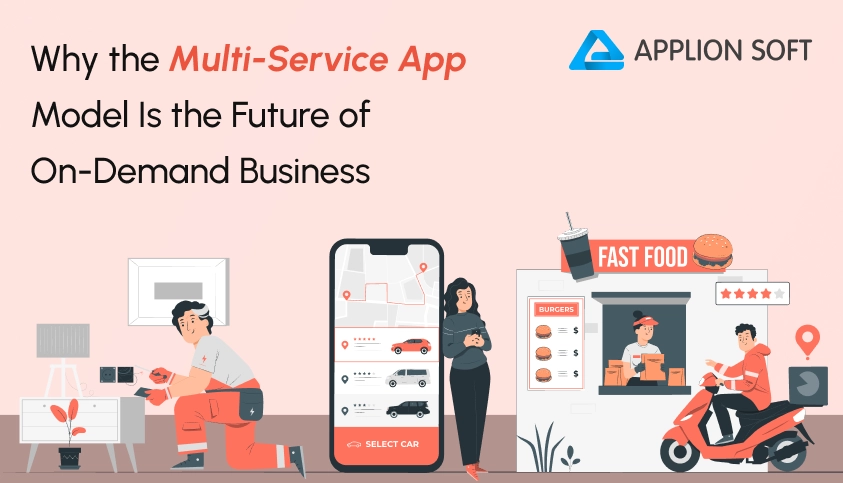
Ten years ago, users needed separate apps for everything. One app to book a cab. Another to
order food. A third to send a package. A fourth to book a repair. That habit is fading fast. Today,
users want one app that does it all. Businesses that offer only one service are starting to feel the
pressure. This is why the Multi-Service App model has become the biggest shift in the
on-demand economy.
A Multi-Service App is not just a trend. It is a business strategy. A single platform hosts many
services – rides, delivery, groceries, home help, payments, and more – under one login and one
wallet. Users do not need ten different apps. They get everything in one place. For founders and
on-demand startups, this model is quickly becoming the default way to build and grow.
In this guide, you will learn what a Multi-Service App is, why it is growing so fast, and how Super
app development works in practice. You will also see why so many founders choose Gojek
clone app development to launch their own version of this model. We cover monetization, real
challenges, and how to pick a development partner. By the end, you will have a clear, practical
roadmap.
What Is a Multi-Service App, and Why Does It Matter?
It is one platform that bundles several services into a single experience. A user opens the app
once. They can book a ride, order groceries, schedule a cleaning, send a courier package, or
pay a bill. They never need to switch apps or log in again.
This is different from a single-service app. A food delivery app only delivers food. A ride-hailing
app only books rides. It does one job well and stops there. This model removes that wall. It
treats a user’s daily needs as one connected journey, not ten separate errands.
You will often hear the term “super app” used alongside Multi-Service App. Both describe the
same idea. One ecosystem. Many services. One account. One wallet. Asian markets
popularized this model first. Now founders across the Middle East, Europe, Africa, and North
America are following the same path. Users everywhere want the same thing: convenience
without app-switching fatigue.
The Numbers Behind the Multi-Service App Boom
This shift is not a guess. The data backs it up.
- Market research from 2026 places the global super app industry above 150 billion
dollars. Forecasts point toward half a trillion dollars within the next several years. - Analysts point to yearly growth rates between 20 and 30 percent. That is far faster
than most single-purpose app categories. - Asia-Pacific still leads adoption. But the Middle East, Africa, and Latin America are
now the fastest-growing regions. Mobile-first users there skip traditional retail habits.
They go straight to app-based services. - Payments and built-in finance tools make up a large share of platform revenue. A
stored wallet keeps users coming back for reasons beyond the original service.
These numbers matter. They show this shift is not a passing trend built for one region. It is a
global change in how people expect to use apps, and it should shape how founders plan their
next product.
Why On-Demand Businesses Are Moving Away from Single-Service Apps
Rising Customer Acquisition Costs
Getting a new app download is expensive. It gets more expensive every year. A business with
only one service has to fight for a new customer every time it wants to grow. This model flips the
problem. Once a user joins the platform, adding a second or third service to that same user
costs far less than finding a brand-new customer.
Users Want Convenience, Not Ten Different Apps
Phone storage is not endless. A user’s patience is not endless either. Most people delete apps
they do not use every week. A single-service app has to fight hard to stay relevant. A platform
built this way earns a permanent spot on the home screen. It solves so many everyday
problems that deleting it is never worth it.
Cross-Selling Unlocks New Revenue Without New Users
A ride-hailing platform that also offers grocery delivery does not need new users to grow that
revenue. It already has them. This is the real financial power behind this model. Every new
service added to the platform increases the value of users who are already there, without
spending extra money to find them.
How the Multi-Service App Model Works
The Core Platform
At the center sits a core platform, sometimes called the super app shell. This layer handles
login, user profiles, notifications, and the home screen that lists every available service. It is the
foundation everything else is built on.
Mini Apps or Modules Inside It
Each service – rides, food, courier, home help, or grocery – runs as its own module. It is often
called a mini app. These modules plug into the core platform. They can be added, updated, or
removed on their own. This is what makes the model so flexible. Founders can launch new
categories fast.
One Wallet, One Login, One Trust Layer
The biggest advantage for users is a single trust layer. One login. One saved payment method.
One support channel. Once a user trusts the platform for one service, that trust naturally
extends to every other service inside the app. This is why users adopt new services so easily
once they are already on board.
Real-World Success Stories
Some of the world’s most valuable consumer platforms built their business around this model.
Southeast Asian giants started as ride-hailing apps. They expanded into food delivery, digital
payments, insurance, and groceries within a few years. A single-purpose app turned into a
daily-use ecosystem. Messaging platforms in East Asia went even further. They added
payments, shopping, and bill pay on top of a chat app. It became the main way hundreds of
millions of people manage their digital lives.
Closer to the delivery and mobility space, many regional players follow the same path. Launch
with one core service. Prove demand. Add adjacent services once the user base trusts the
brand. This pattern repeats in every market, because user behavior is the same everywhere.
Once trust is built, users are happy to do more inside an app they already know.
Super App Development: What It Actually Takes
Building super app development on a platform is not the same as building a single-purpose
app with extra screens bolted on. It needs a different mindset from day one.
Modular Microservices Architecture
Every service inside the app – rides, delivery, bookings, payments – should run as an
independent piece of code. This way, updating the grocery module never risks breaking the
ride-hailing module. A well-built platform always starts with this separation. It lets the business
keep adding services without slowing down or breaking what already works.
Unified Payments and Wallet System
Payments make or break this kind of platform. Users expect to pay for a ride and a grocery
order using the same saved card or wallet balance. This needs one central payment gateway
that every module can plug into. It also needs fraud checks, refund logic, and support for
multiple currencies if the platform plans to expand across borders.
A Scalable, Multi-Vendor Backend
This kind of app often manages several vendor types at once – drivers, restaurants, stores, and
service professionals. Each has different workflows and commission structures. The backend
must scale easily, so adding a new vendor category never means rebuilding the whole system.
AI-Driven Personalization
The best platforms use AI to suggest the next useful service based on past behavior. A user
who books a late-night airport ride might get a grocery delivery prompt the next morning. This
kind of personalization turns a bundle of services into a real daily habit.
Why Gojek Clone App Development Is the Fastest Path Forward
Building this kind of app from a blank codebase can take over a year. It also needs a large
budget. So much core work – login, wallet, notifications, admin panel – must be built before a
single service goes live. This is exactly why so many founders skip that step. They start with a
ready-made foundation instead.
Gojek clone app development takes the proven, tested architecture of a top platform. It adapts
that architecture to a new brand, region, and service mix. A founder gets a working foundation
instead of designing the wheel from scratch. They can focus fully on branding, local service
categories, and go-to-market strategy.
What a Gojek Clone Script Actually Includes
A well-built Gojek clone script ships with the core pieces this model needs on day one. That
includes a customer app, a driver or provider app, and an admin dashboard. Backend logic
connects all three. It also includes in-app payments, live tracking, ratings, and push
notifications. Multi-service booking flows are ready too. These pieces come pre-built. A team
configures them instead of coding them from zero.
Customizing a Gojek Clone Script for Your Market
No two markets are alike. A Gojek clone script is never used exactly as-is. A serious partner
localizes currency and language. They adjust commission rules for local law. They rebrand the
entire interface. They also add or remove service categories to match the target market. The
result feels like a custom-built app. But it launches in a fraction of the time.
Industries Best Suited for This Model
Not every business needs to become a super app. But several industries fit naturally:
Mobility and delivery:
Ride-hailing platforms that add food, grocery, and courier delivery under one roof.
Home services:
Platforms combining cleaning, repair, plumbing, and beauty bookings with one payment method.
Grocery and quick commerce:
Adding pharmacy delivery or same-day essentials to an existing grocery app.
Local marketplaces:
Regional platforms that bundle vendors, from tailors to electricians, under one trusted brand.
Fintech platforms:
Wallet apps that expand into bill payments, insurance, and bookings to boost daily use.
Any business with a loyal user base and repeat usage is a strong candidate for this model. The
hardest part – earning user trust – is already done.
How Businesses Make Money From This Model
This kind of app has more revenue levers than a single-service app. That is a major advantage
for founders and investors alike.
- Commission per transaction across every service category, not just one.
- Subscription plans that offer discounts across all bundled services, which boosts
retention. - In-app advertising, where vendors pay to appear in front of a larger, more active
user base. - Wallet float and payment fees, since a stored wallet balance keeps money inside
the ecosystem longer. - Promoted listings for vendors, drivers, or providers who want more visibility.
Because users are already active across several services, average revenue per user tends to
climb steadily, without a matching rise in marketing spend.
Common Challenges (and How to Solve Them)
No model this powerful comes without real challenges. It helps to be upfront about them.
Technical complexity:
Running several services on one platform means more moving parts and more testing. The fix is
a modular architecture, so one service failing never takes down the whole app.
Vendor quality control:
More service categories mean more vendors to check, train, and monitor. A strong admin
dashboard with ratings and clear onboarding rules keeps quality steady as the platform grows.
User experience overload:
Cramming too many services onto one home screen can confuse users instead of helping them.
The fix is smart navigation and AI personalization that shows only the services a user is likely to
need.
Regulatory differences:
Payments, mobility, and delivery are often regulated separately, even in the same country. This
is why local legal review matters just as much as the technology itself.
Future Trends Shaping This Model
This model keeps evolving. A few trends will shape where it goes next:
- AI-first service discovery, where the app predicts what a user needs before they
open the search bar. - Voice booking, letting users request a ride or order groceries through natural
language instead of tapping menus. - Deeper embedded finance, with more platforms offering small loans, insurance,
and savings tools inside the app. - Hyperlocal expansion, where regional platforms outcompete global players by
understanding local vendors better. - Sustainability features, like eco-friendly delivery options, become a standard part of
the menu rather than an add-on.
Founders who build with this flexibility in mind from day one will adapt faster as user
expectations shift.
How to Choose the Right Development Partner
Picking a development partner is one of the most important decisions in this whole process. It
deserves real scrutiny.
Proven experience:
Ask to see past on-demand platform or app development projects, not just single-service apps.
Full code ownership:
Make sure the final script and all customizations belong fully to you, not the vendor.
Post-launch support:
This kind of app needs ongoing updates. Confirm what support is included after launch.
Scalability track record:
Ask how their past platforms handled growth from a few hundred users to tens of thousands.
Transparent pricing:
A trustworthy partner explains exactly what the total build cost includes, with no hidden fees.
The right partner turns a proven template into a platform that feels entirely your own, built for
your market and your growth plan.
Conclusion
The on-demand economy has moved past the era of single-purpose apps. Users no longer want
separate apps for every errand. Businesses that keep offering only one service will keep paying
more to win and keep the same customers competitors already own. The Multi-Service App
model solves both problems at once. It gives users everything in one trusted place, and it gives
businesses a far more efficient way to grow revenue from customers they already have.
Maybe you are launching your first on-demand platform. Maybe you are expanding one you
already run. Either way, Gojek clone app development offers the fastest, most cost-effective
route into this model. Super app development done right can turn a single idea into a full
ecosystem your users rely on every day. If you are ready to move forward, partnering with an
experienced clone app development company can help you turn this roadmap into a live,
revenue-generating platform.