Starting an on-demand business from scratch is hard right now. It’s also expensive. Funding is tighter than before. Users expect instant service in every category. Building a multi-service app from zero can take a team a year or more before the first booking even happens. This is why so many founders now choose a ready-made, proven business model instead.
A Gojek Clone App gives founders a working copy of one of Southeast Asia’s most successful super apps. It covers ride-hailing, food delivery, courier services, groceries, and home services, all in one platform. You don’t need months to test if a multi-service idea works. You launch with a model that millions of users already trust.
In this guide, we’ll cover why this business model fits today’s market. We’ll look at what goes into gojek clone app development, what it costs to launch an app like gojek, and what to check for in a reliable gojek clone script before you spend your budget.
We’ll also walk through the exact features to look for, a step-by-step launch roadmap, and the metrics that tell you whether your platform is actually working once it’s live. By the end, you should have a clear, practical picture of whether this model fits your startup plans.
What Is a Gojek Clone App?
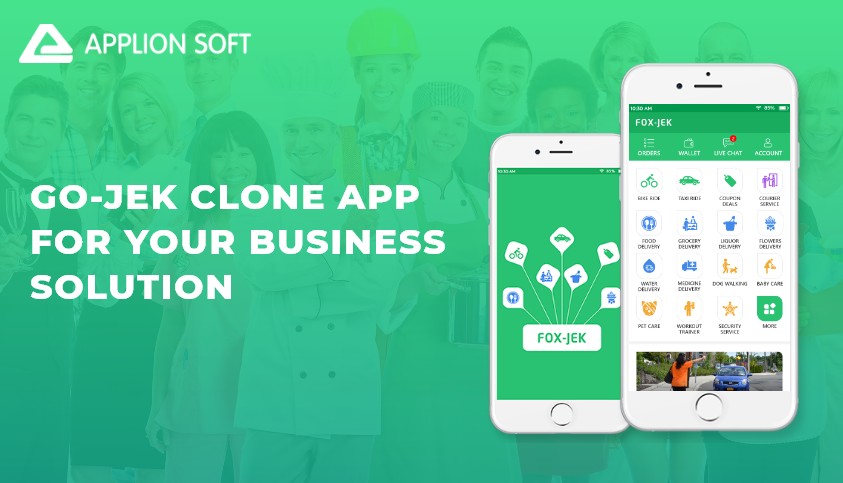
A Gojek App is a ready-built software solution. It copies the core features, workflow, and business logic of the original Gojek super app. Instead of building separate apps for taxis, food, courier pickup, and home services, everything sits under one platform, one wallet, and one admin system.
Most solutions include three connected apps. There’s a customer app for browsing and booking services. There’s a partner app for drivers and vendors to accept jobs. And there’s an admin panel for the business owner to manage pricing, commissions, and reports. Since the core system is already built and tested, you mostly customize branding, service types, and regional settings before you go live.
This is very different from building a similar super app from scratch. That path means designing, coding, and testing every workflow, payment step, and dispatch rule on your own. A clone solution skips most of that work. It turns a year-long build into a matter of weeks.
Why the Gojek Business Model Still Wins in the Current Market
The market today rewards businesses that can prove revenue fast and run lean. Investors are more cautious. Customer acquisition costs have gone up across the board. Users are also tired of switching between five or six apps just to run daily errands. This is the exact gap the Gojek model was built to close.
A single super app that bundles rides, deliveries, and errands earns more from each user, because customers come back for more than one reason. It also cuts marketing spend, since one user can create bookings across several service lines instead of just one. For a new business on a tight budget, this effect matters more today than it did five years ago.
There’s also a shift in user behavior worth noting. Consumer habits changed after the pandemic. On-demand convenience is now normal for almost every part of daily life, from groceries to home repairs. This type of super app is built to serve that exact expectation. It gives a new brand instant credibility, because the experience already feels familiar and trustworthy from day one.
There’s a growing discovery angle too. More people now use AI assistants and search engines to research local services and startups before they commit. A platform built on a recognizable, well-documented model like Gojek’s is easier to describe, compare, and recommend, both to human users and to the AI tools shaping how people find new apps.
Key Reasons a Gojek Clone App Is the Best Startup Solution Right Now
Here’s why founders in ride-hailing, delivery, and hyperlocal services are choosing this route over custom development.
1. Faster Time to Market
Custom development for a multi-service app usually takes eight to twelve months. That includes design, backend work, testing, and app store approval. A ready-made clone solution comes with the core modules already built. Most businesses can rebrand, configure, and launch within three to six weeks. In a fast-moving market, that speed can decide who wins the early user base in a city.
2. Lower Development Cost Without Cutting Corners
Building an app like gojek from scratch, with real-time tracking, multi-service dispatch, wallets, and admin dashboards, often costs between $45,000 and well over $250,000. A ready-made clone solution usually starts between $10,000 and $45,000 for a full white-labeled build. That gap frees up budget for marketing, driver incentives, and local operations, which are often what actually drive early traction.
3. A Proven, Battle-Tested Business Model
One of the biggest risks for any startup is not knowing if the business model even works. With this approach, that risk is already gone. Commission rules, surge pricing, partner onboarding, and multi-service bundling have all been refined through years of real use. You’re not guessing whether people want an all-in-one app. You’re adapting a model that already has the answer.
4. Multiple Revenue Streams From Day One
A single-service app depends on one revenue channel only. A Gojek Clone App launches with several built in: commission on rides, commission on food and grocery orders, delivery fees, subscription plans, in-app ads for local businesses, and surge pricing during peak hours. This spread protects the business if one line, like ride-hailing, slows down for a season, since other services keep bringing in income.
5. Built-In Scalability
Most clone platforms run on modular, cloud-based architecture. That means new cities, new service categories, or new payment gateways can be added without rebuilding the core system. This matters a lot for a startup planning to grow from one city to a national footprint, since scaling this kind of platform is mostly a setup task, not a rebuild.
6. Lower Technical Risk
Custom-built platforms often reveal bugs, security gaps, or performance issues only after real users start using them. A well-established clone platform has already been deployed across many businesses. Most of its issues have already come up and been fixed. You start from a more stable base instead of finding problems after launch.
Core Features to Look for in a Gojek Clone Script
Not every clone solution is built the same way. Before you pick a development partner, check that the platform includes these essentials.
- Multi-service dashboard: One screen where users can switch between ride booking, food ordering, courier requests, and home services without leaving the app.
- Real-time tracking and live ETA: GPS tracking for both the customer and partner apps, with accurate arrival times for every service type.
- Integrated in-app wallet: A secure wallet that supports cards, UPI, net banking, and cash on delivery, plus automatic payouts for partners.
- Dynamic and surge pricing engine: Pricing logic that adjusts fares or fees on its own, based on demand, distance, or time of day.
- Partner and fleet management: Tools to onboard drivers and vendors, verify documents, track performance, and manage availability.
- Admin analytics panel: A dashboard that shows bookings, revenue by service line, active users, and regional performance in real time.
- Multi-language and multi-currency support: Needed for any business planning to expand this platform beyond a single city or country.
- Push notifications and in-app chat: Direct communication between customers and service providers, which cuts down on cancellations and support tickets.
Who Should Consider This Business Model
A Gojek Clone App isn’t the right fit for every idea, but it fits a specific type of founder well. If you’re entering ride-hailing, food delivery, grocery, courier, or home-service markets and want to compete on convenience rather than reinvent the wheel, this model is a natural fit, since the platform already supports these verticals out of the box.
It also suits existing local businesses, like regional taxi operators or delivery services, that want to modernize and add new revenue streams under one digital brand instead of running separate systems for each service. Franchise-style expansion also benefits, since one tested codebase can be copied across new cities or countries with minimal rework.
On the other hand, if you’re building a highly specialized, single-purpose product, such as a niche B2B logistics tool, custom development usually makes more sense. A broad multi-service framework adds complexity that a narrow use case simply doesn’t need.
Gojek Clone App Development Cost in 2026: What to Expect
Pricing for this solution usually falls into three tiers. Knowing where your business fits helps you avoid paying for features you don’t need yet.
MVP or starter build
Usually $10,000 to $25,000. Covers core services like ride booking and delivery, a basic wallet, and a simple admin panel. Good for testing one city or region before you invest more.
Mid-range customized build
Usually $25,000 to $70,000. Adds more service categories, better analytics, custom branding, and third-party integrations like payment gateways and maps.
Enterprise-grade super app
Usually $70,000 to $250,000 or more. Built for businesses planning multi-city or multi-country operations, with dedicated infrastructure, AI-based dispatch, and full customization across every module.
The exact cost depends on how many service verticals you need, the tech stack used for development, whether you go native or cross-platform, and where your development partner is based. Always ask for a detailed, feature-by-feature quote before you commit. It’s the best way to keep your budget in check.
How to Launch Your Gojek Clone App: A Step-by-Step Roadmap
- Step 1: Define your service scope: Decide which categories to launch with first, ride-hailing, food delivery, groceries, or a mix, based on demand in your target city.
- Step 2: Choose the right gojek clone script: Check vendors for source code ownership, customization options, security practices, and post-launch support before you sign anything.
- Step 3: Customize branding and workflows: Update the app’s design, service categories, pricing rules, and payment options to fit your local market and audience.
- Step 4: Onboard early partners: Recruit a first group of drivers, riders, or vendors before you launch, so users see real service availability from day one.
- Step 5: Run a controlled soft launch: Test the platform in one neighborhood first. Collect feedback and fix operational gaps before you expand city-wide.
- Step 6: Scale city by city: Use data from your soft launch to guide expansion. Add new service categories or regions once the core experience is stable.
Metrics to Track After Launch
Once your Gojek Clone App goes live, a handful of numbers will tell you far more than gut feeling. Track these closely in your first ninety days.
- Booking completion rate: The share of bookings that finish successfully, instead of getting cancelled by the user or the partner. A low rate usually points to slow partner response times or unclear service availability.
- Partner utilization: How often your drivers and vendors are active versus idle. Low utilization means you have more supply than demand, and it’s a signal to slow down partner onboarding or boost marketing.
- Revenue per user across service lines: Track this by category, not just as one number. It shows you which services are pulling their weight and which ones need better pricing or promotion.
- App store ratings and support tickets: Early reviews and recurring complaints often reveal bugs or friction points faster than any internal dashboard, so read them closely during your first few weeks.
Choosing the Right Gojek Clone App Development Partner
The success of any clone-based launch depends heavily on the partner behind it. A generic, poorly maintained script can cause more problems than it solves. Watch out for security gaps, limited customization, and weak post-launch support.
When you evaluate a gojek clone app development company, look for full source code ownership, not a locked licensing model. Ask for a portfolio of live, working apps, not just design mockups. Check for clear pricing with no hidden module costs. And make sure they offer ongoing updates as app store rules and payment regulations change over time.
At Applionsoft, every Gojek Clone App is built on a modular, white-labeled foundation. This lets you launch fast without giving up the flexibility to grow, add new service verticals, or expand into new regions as your business matures.
Why This Model Fits an AI-Driven Search Landscape Too
Search habits have changed. More people researching startup ideas or local service apps now ask AI assistants directly instead of scrolling through search results. That means the content and structure behind a business need to be easy for these tools to read, summarize, and quote correctly.
A clear, well-documented business model with set pricing tiers, features, and use cases, the same structure this article follows, is much easier for AI systems to reference correctly than a vague, overly technical write-up. This is one more reason a standard, well-understood platform tends to earn more visibility, in both search rankings and AI-generated answers, than a hard-to-summarize custom build.
Common Challenges and How to Overcome Them
- Partner acquisition in a new market: Offer early-bird incentives and a zero-commission period for your first batch of drivers and vendors, so you build supply before demand ramps up.
- Balancing multiple service categories: Launch with one or two strong verticals first, rather than every service at once, then expand once operations are stable.
- Local competition from established apps: Stand out through hyperlocal focus, faster delivery windows, or service categories that bigger platforms have overlooked.
- Regulatory and payment compliance: Work with a development partner who has experience with local payment gateways and data compliance rules for your target region.
Final Thoughts
The current market rewards speed, cost control, and proven models over experiments, and that’s exactly what a Gojek Clone App delivers. It shortens the gap between idea and launch, lowers the financial risk of testing an unproven concept, and gives founders several revenue streams from the very first transaction.
Whether you’re planning a single-city ride and delivery service or a full multi-service platform, the partner and Gojek clone script you choose will shape how fast you move from planning to real, paying customers. Working with the right clone app development company can further streamline development, customization, and deployment. For most founders navigating today’s market, that head start isn’t just nice to have. It’s often the difference between launching this quarter or missing the window entirely.