
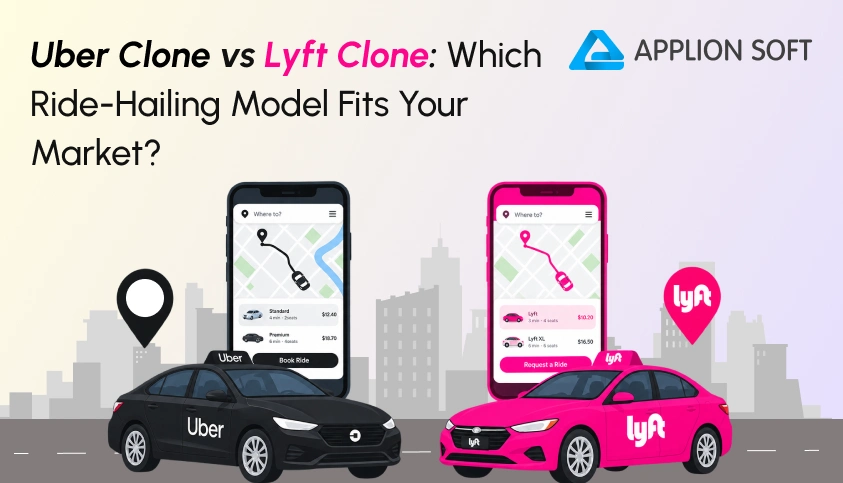
Choose an Uber clone app if you want a wide, multi-tier platform that can grow into delivery and other services. Choose a Lyft-style model if you want a simple, community-first ride-sharing app for dense cities. Your market size, competition and rider habits should make the call, not the brand name.
You have a ride-hailing idea and two big names in your head. Uber and Lyft look alike on the surface. Both let riders tap a button and get a car. Both pay drivers per trip. Both keep a cut. If you plan to build an Uber like app, your first question is simple: which model should you copy?
Yet the two companies run their businesses in different ways. That difference decides how your own platform should look, price and grow.
This guide explains the Uber clone vs Lyft clone app choice in plain words. You will see how the two models differ, which market signals point to each one, and what you need to launch.
By the end, you will know which path suits your city, your budget, and your goals.
One note before we start. A “clone” copies a proven business model and feature set. It does not copy anyone’s name, logo, or brand. You launch under your own brand, with your own rules.
Uber Clone vs Lyft Clone App at a Glance
Here is the short version. Read the table first, then dive into the details below.
| Factor | Uber-style model | Lyft-style model |
|---|---|---|
| Core idea | Broad platform that serves many needs | Focused, community-first ride-sharing |
| Best fit | Large cities and multi-city plans | Dense cities with loyal local riders |
| Ride options | Many tiers, from economy to premium | Fewer tiers and simpler choices |
| Growth path | Add delivery and other services | Deepen rides, perks, and driver loyalty |
| Launch scope | Larger, with more modules | Leaner and faster |
| Main risk | Heavier operations and compliance | Narrower revenue base |
What Is an Uber Clone App?
An Uber clone app is a ready-made ride-hailing platform built on the proven workflow of the market leader. A rider requests a trip. A nearby driver accepts it. The app then handles navigation, fare calculation, and payment.
A complete Uber clone app usually ships as three connected parts:
- Rider app: booking, live tracking, fare estimates, in-app payments, and ratings.
- Driver app: trip requests, navigation, an earnings dashboard, and an online/offline toggle.
- Admin panel: pricing rules, driver approval, commissions, and reports.
The big idea behind the Uber model is reach. Uber runs in more than 70 countries, and it added food delivery through Uber Eats. Operators who follow this model plan for many ride types, many cities, and extra services over time.
If you want a taxi booking app like Uber that can grow into a multi-service platform, this is the model to study. In short, an Uber-like app gives you a tested path to market instead of a blank page.
What Is a Lyft Clone App?
A Lyft clone app is a focused ride-sharing app built around community. Lyft grew mainly in the United States and Canada, and it built its brand around a community feel. It stayed focused on rides instead of building a large delivery arm.
More recently, it added European reach by acquiring Freenow.
A Lyft clone script gives you the same three-part structure: rider app, driver app, and admin panel. The difference is tuning. You offer fewer ride tiers, clear pricing, friendly driver perks, and strong local loyalty.
Lyft clone app development also tends to cost less, because the scope is tighter. Think of it as the “less but better” route.
How a Ride-Hailing App Works, Step by Step
Every ride-sharing app follows the same loop. Here it is in six steps:
- The rider opens the app and enters a pickup and drop-off point.
- The app shows a fare estimate and the available ride options.
- The rider confirms, and the system searches for nearby drivers.
- A driver accepts, and the rider sees live tracking on the map.
- The trip ends, and the app charges the saved payment method.
- Both sides rate the trip, and the platform deducts its commission.
This loop sits at the heart of any Uber like app. The Uber clone vs Lyft clone app question only changes how much you build around it.
The Ride-Hailing Business Model Behind Each Choice
Both apps run on the same ride-hailing business model. It is a two-sided marketplace. Riders want fast, safe trips. Drivers want steady income. Your app connects them and earns a commission on every ride.
The real difference lies in how each side stretches that ride-hailing business model.
How the Uber model stretches
- Breadth: economy, premium, shared, and other ride types live in one app.
- Dynamic pricing: fares rise when demand beats supply, which pulls more drivers online.
- Extra revenue: memberships, in-app ads, and new services add income beyond the commission.
How the Lyft model stretches
- Depth: fewer products, each one polished and easy to use.
- Driver goodwill: clear earnings, perks, and support keep drivers loyal.
- Local ties: partnerships with venues, events, and city programs build trust.
In most US markets, both companies treat drivers as independent contractors. Rules vary by region, so check your local laws before you set your driver terms.
Five Market Signals That Point to the Right Model
Do not pick a model by hype. Score your market on these five checks instead.
1. Market size and spread
Do you plan to serve a large metro area, or several cities in one country? Then an Uber-style build gives you room to grow. Do you plan to win one or two dense cities first? A Lyft-style build keeps your launch tight.
2. Competition level
Look at who already serves your riders. If strong rivals exist, you need a sharp angle, such as women-only rides, airport transfers, or premium cars. If few rivals exist, a broad offer with many ride tiers helps you grab riders fast.
3. Rider habits and budgets
Riders in price-sensitive markets love the economy and shared options. A mixed-income city also needs several tiers. A loyal, service-minded city often rewards a simple app with friendly drivers.
4. Local rules
Licensing, insurance, and driver classification shape your costs. Tight rules favor a leaner model, because it leaves less to manage. Always confirm the details with a local legal expert.
5. Your growth plan
Do you want to add delivery or other services later? Choose an Uber-style foundation now, even if you launch with rides only. Not sure yet? Start lean and add modules as demand grows.
Features That Change Your Build
In any Uber clone vs Lyft clone app comparison, both models need the same core features: GPS tracking, fare estimates, secure payments, ratings, and push alerts. These features then branch in different directions.
Choose these for an Uber-style build:
- Multiple ride categories with separate fare rules
- Surge pricing controls in the admin panel
- Scheduled rides and ride sharing
- Multi-language and multi-currency support
- Ready hooks for delivery or other services
Choose these for a Lyft-style build (a typical Lyft clone script covers them):
- A small set of clear ride options
- Upfront, easy-to-read fares
- Driver bonuses, goals, and quick payouts
- Rider tipping and friendly ratings
- Local promo codes and event pickups
You do not have to pick one list and ignore the other. Many successful operators blend both.
How Each Model Makes Money
Every ride-hailing business model earns from a mix of sources. These are the most common:
- Commission per ride: a percentage of each fare. Both models use this.
- Dynamic pricing: extra income during peak demand. Uber-style apps lean on it more.
- Subscriptions: monthly plans that reward frequent riders with perks.
- Waiting and cancellation fees: small charges that protect driver time.
- Ads and partnerships: local brands pay to reach your riders.
- Add-on services: delivery or parcel moves that use the same driver network.
A smart tip: keep your commission low in the first months. Drivers join fast when they keep more of each fare. You can raise the rate after your network grows.
What Makes Riders Stay (and Pay)
Features win the first ride. Experience wins the tenth. Four things keep riders loyal:
- Speed: short waits and accurate arrival times.
- Trust: verified drivers, trip sharing, and an SOS button.
- Clarity: upfront fares with no surprises.
- Rewards: promo codes, referral credits, and ride packs.
Drivers stay for similar reasons. They want fast payouts, a fair commission, and quick support. A happy driver network is the quiet engine of every ride-sharing app. If drivers leave, riders follow soon after.
Safety and Trust Features Your App Needs
Safety sells. Whichever model you choose, build these in from day one:
- Driver document checks and vehicle verification
- Live trip sharing with family and friends
- An in-app SOS button
- Number masking, so riders and drivers never see each other’s phone numbers
- Two-way ratings and a simple complaint process
These tools cost little compared with the trust they create. Riders choose the app that makes them feel safe.
What Affects the Cost of Your App
Your total cost depends on a few clear factors:
- The platforms you need: Android, iOS, and a web admin panel
- The number of ride types and custom features
- Payment gateways and supported currencies
- Map services, SMS, and hosting
- The level of customization and branding
Ready-made Uber clone app development usually costs far less than a build from scratch, because the core is already tested. Lyft clone app development can cost even less when you limit the feature set.
Either way, ask for a full quote that includes hosting, support, and updates. A taxi booking app like Uber also needs funds for driver acquisition, so budget for marketing as well.
Uber Clone App Development vs Lyft Clone App Development: What You Need to Launch
Both paths need the same base: a rider app, a driver app, an admin panel, a payment gateway, maps with GPS and notifications by push and SMS. Scope is the main difference.
Uber clone app development covers more ride types and add-ons. Lyft clone app development stays closer to the basics.
You also face a build choice. A ready-made script saves months and cuts risk. A full custom build costs more and takes longer, but it suits rare needs. Most new operators pick a ready-made base with full source code, then customize it to fit their market.
Use this launch checklist:
- Pick your model. Score the five market signals above.
- Check local rules. Confirm licenses, insurance, and driver terms.
- Choose your base. Select a ready-made Uber clone app or Lyft clone script with full source code.
- Brand it. Add your name, logo, colors, and ride categories.
- Set your pricing. Decide on base fares, per-km rates, and commission.
- Test with real drivers. Run a small pilot, fix issues, then launch.
Three Launch Scenarios
Real cases make the choice easier. Here are three common ones.
Scenario 1: A capital city with several rivals. Riders have many choices, so your Uber-like app needs a clear edge. Go with an Uber-style build, add premium and women-only tiers, and market to a clear niche.
Scenario 2: A mid-size university town. Two small operators exist, and riders know each other. A Lyft clone script fits well here. Keep the app simple, reward your best drivers, and sponsor local events.
Scenario 3: A region with multi-city and delivery plans. You want one brand across many towns. Start with an Uber-style foundation, launch rides first, and switch on delivery when your driver base is ready.
Mistakes to Avoid
- Copying the brand, not the model. Never use another company’s name, logo, or design. Build your own identity.
- Overbuilding at launch. Many founders load their taxi booking app like Uber with too many features. More features mean more bugs and more cost. Launch with what riders need today.
- Ignoring the driver’s side. Without drivers, riders wait. Win supply first.
- Skipping local rules. Fines and bans hurt more than a slow launch.
- Choosing by hype. Let your market data decide, not the loudest brand. An app like Uber works because it fits its market, not because it is famous.
- Picking a Lyft clone script only for its price. A lower price means little if the scope does not match your riders.
Why Applionsoft Fits Either Path
Applionsoft offers a ready-made Uber clone app with a rider app, a driver app and a web admin panel. Whether you want a taxi booking app like Uber or a lean ride-sharing app for one city, the code is white-label and customizable, so you can grow it in an Uber direction or trim it toward a simpler Lyft-style experience.
The team has delivered 250+ apps and its Uber clone app development process supports quick launches.
You can also explore the Uber clone app features, check the pricing details and try the live demo before you decide.
Conclusion
Uber and Lyft prove that one ride-hailing business model can grow in two ways. The Uber model wins through reach, variety, and new services. The Lyft model wins through focus, simplicity, and loyalty.
In the Uber clone vs Lyft clone app debate, neither one wins every market. The right choice is the one that matches your city, your riders, and your goals.
Start with the five market signals. Score your competition, your rider habits, your local rules, and your growth plan. Then pick a base you can shape. Whether you launch a ride-sharing app for one city or an Uber-like app for many, the same rule applies: start with the riders, then build.
A trusted clone app development company gives you full source code, white-label branding, and launch support, so you can focus on drivers and riders instead of code.
Ready to see how it works in your market? Explore the Applionsoft demo and take the first step toward your own ride-hailing brand.
Launch Your Own Ride-Hailing Brand in Days
See the Applionsoft Uber clone app in action. Get a free live demo, explore full source code options, and plan your launch with our experts.
Get a Free Live DemoFrequently Asked Questions
What is the difference between an Uber clone and a Lyft clone?
An Uber clone follows a broad, multi-service model with many ride tiers and room to add delivery. A Lyft clone follows a focused, community-first model with simpler ride options. Both use the same rider app, driver app, and admin panel structure. They differ in scope, pricing tools, and growth plans.
Which ride-hailing business model is better for a new startup?
It depends on your market. A large city with many riders and strong competition favors an Uber-style model with several tiers. A smaller, dense market favors a leaner Lyft-style model, where Lyft clone app development keeps the scope tight. If you plan to expand later, start with a flexible Uber-style base and launch only the features you need.
Can I turn an Uber clone into a Lyft clone script?
Yes, if the code is customizable. A flexible Uber clone and a Lyft-style app share the same core. You can reduce ride categories, simplify fare screens and add driver perks and local promo tools. This is why full source code matters. It lets you shape the app to your market instead of forcing your market into the app.
How long does Uber clone app development take?
A ready-made script can go live in days after you customize the branding and settings. A fully custom build usually takes several months. Your timeline depends on the number of ride types, payment gateways, languages, and extra services you want.
Is it legal to launch a taxi booking app like Uber?
Yes, when you use your own brand, follow local transport rules and hold the required licenses. A clone copies a business model and features, not a company’s name or design. Rules differ by country and city, so confirm the details with a local legal expert. This answer is general information, not legal advice.